
http://designmuseum.org/exhibitions/2013/designs-of-the-year-2013
Archive | Uncategorized RSS feed for this archive
The falling man: the art of Kerry Skarbakka – in pictures | Art and design | guardian.co.uk
March 2, 2013
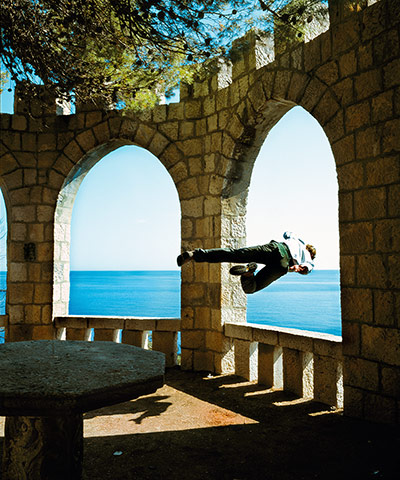
The falling man: the art of Kerry Skarbakka – in pictures
Arizona-born artist Kerry Skarbakka has received both awards and death threats for his controversial ‘falling man’ images. His work in Chicago sparked outrage when it was interpreted by some as a recreation of the tragic jumpers from the World Trade Centre on 9/11. Others have praised the 42-year-old for his insight and he was named an up-and-coming star on the NBC Today Show. This is his latest set of images
via The falling man: the art of Kerry Skarbakka – in pictures | Art and design | guardian.co.uk
Quote from the last image (15/15): “He says he has had ‘hundreds of wonderful letters from individuals stating how much they appreciated the work, as it managed to represent their own feeling of uncertainty'”
See: ‘Constructing for Uncertainty’
and an unabashed plug for:
FabPod
February 27, 2013
Designed and constructed here at RMIT, the FabPod project took up the challenge of designing and prototyping a meeting room enclosure to sit within the DRI open work environment on level 9 in the new Design Hub at RMIT.
FabPod combines research into the sound diffusing properties of hyperbolic surfaces, with the problem of small semi enclosed meeting areas in open plan settings, utilising a combination of digital modelling and mass customised CNC prototyping and architectural traditions of craft production and material effects.
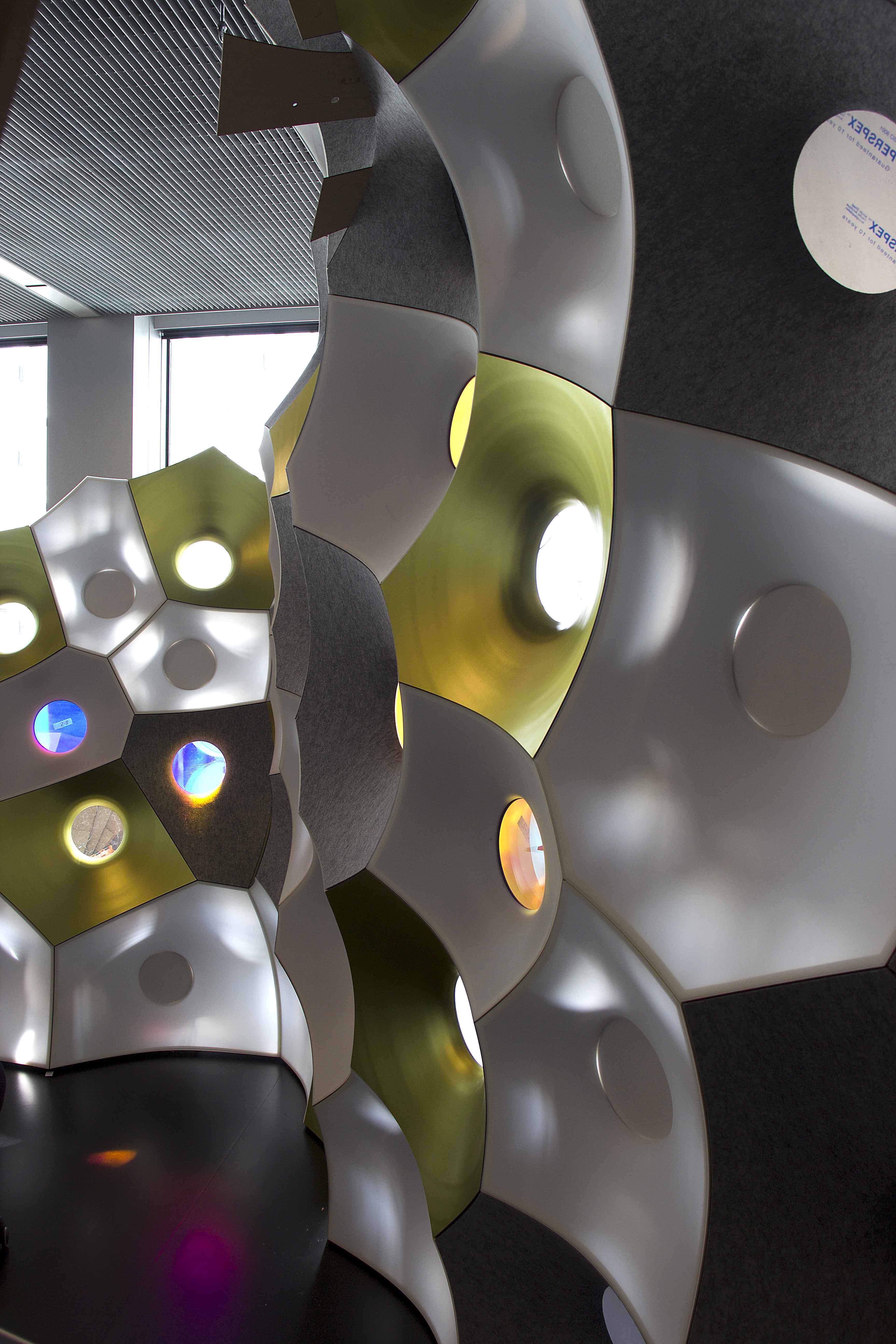
Sala Creuer Site visit: 5 February 2015
February 17, 2013
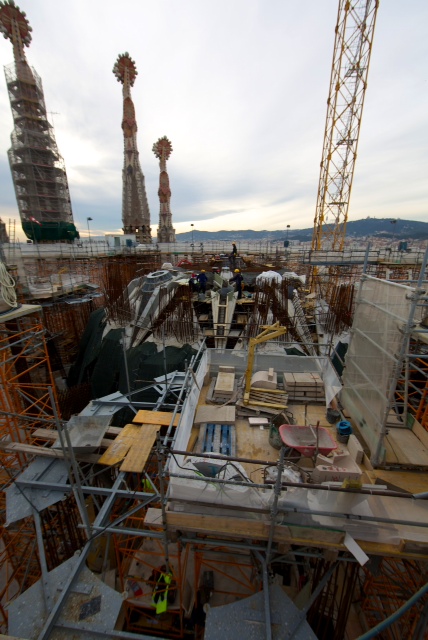
The vaults are well on their way: a mixture of prefab and in situ
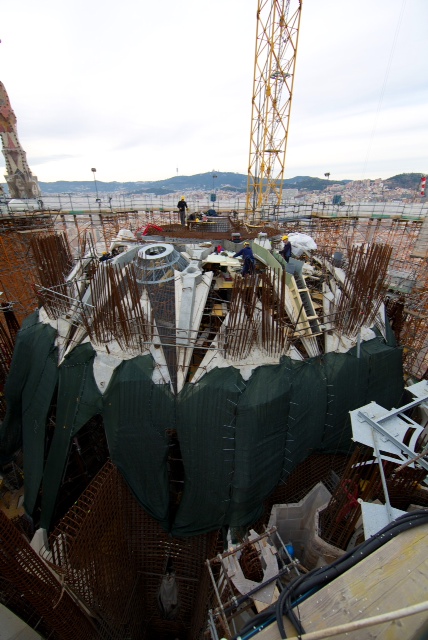
The areas screened by shade cloth are reusable formwork. The external skin is being prefabricated off-site in Galera. Reinforcement is sandwiched between the two layers.
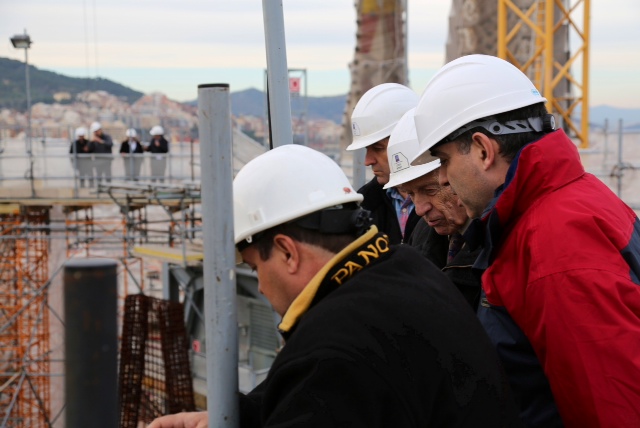
Site visit with architects, engineers, builders
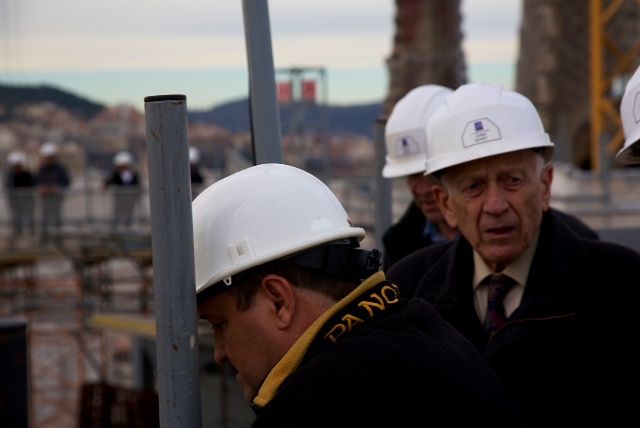
Sr Jordi Bonet
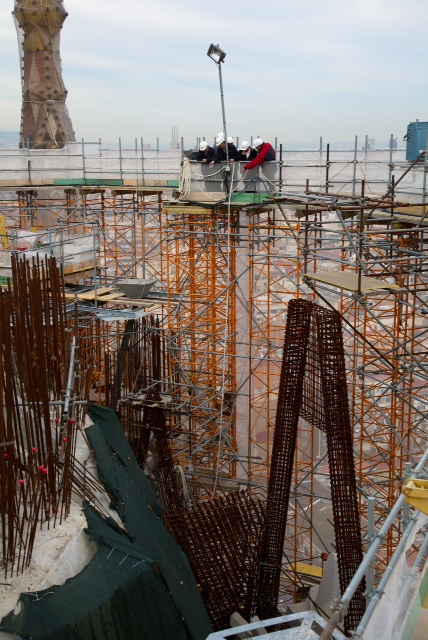
85 metres up… 89 metres from the eventual top
The Economist | The Nordic countries: The next supermodel
February 4, 2013

The Nordic countries
The next supermodel
Politicians from both right and left could learn from the Nordic countries
SMALLISH countries are often in the vanguard when it comes to reforming government. In the 1980s Britain was out in the lead, thanks to Thatcherism and privatisation. Tiny Singapore has long been a role model for many reformers. Now the Nordic countries are likely to assume a similar role.
The Economist | Entrepreneurs: If in doubt, innovate
February 4, 2013
Entrepreneurs
If in doubt, innovate
The Nordic region is becoming a hothouse of entrepreneurship
IN 2010 A GROUP of students at Aalto University, just outside Helsinki, embarked on the most constructive piece of student activism in the history of the genre. They had been converted to the power of entrepreneurialism during a visit to the Massachusetts Institute of Technology. When they got home they organised a “summer of start-ups” to spread the word that Finland’s future lay with new companies, not old giants. The summer of start-ups turned into a season of innovation.
Design as an iterative process
January 24, 2013
What it was really like working with Steve Jobs >> Inventor Labs Blog
Glenn Reid:
I was recruited by Steve’s right hand man to come in to build iMovie 1.0, in large part because I knew a lot about NeXTSTEP, the technology which was to become MacOS X, and because I think Steve liked PasteUp and liked me and thought I could get it done (we were done ahead of schedule, as it turned out).
I can still remember some of those early meetings, with 3 or 4 of us in a locked room somewhere on Apple campus, with a lot of whiteboards, talking about what iMovie should be (and should not be). It was as pure as pure gets, in terms of building software. Steve would draw a quick vision on the whiteboard, we’d go work on it for a while, bring it back, find out the ways in which it sucked, and we’d iterate, again and again and again. That’s how it always went. Iteration. It’s the key to design, really. Just keep improving it until you have to ship it.
There were only 3 of us on the team, growing to 4 within the year, with no marketing and very little infrastructure around us. There was paper over the internal windows to keep other Apple employees from knowing what we were doing
The Economist | Metro systems: Going Underground
January 6, 2013
Metro systems
Going Underground
Subways are spreading fast
THE world’s first underground train, on the world’s first metro system, travelled the three-and-a-half miles from Paddington to Farringdon on January 9th 1863. Then, as now, Londoners queued to get aboard the packed carriages. In October that year The Economist ran an editorial arguing that more such lines under the capital were needed to relieve its congested streets. It concluded that such a network, if well run, would surely be profitable.
The Economist | Air conditioning: No sweat
January 6, 2013
Air conditioning
No sweat
Artificial cooling makes hot places bearable—but at a worryingly high cost
DUBAI
SUMMER humidity in the Gulf often nears 90%. Winds are scant. Even in the shade the heat hovers far above the body’s natural temperature. No wonder that before 1950, fewer than 500,000 lived along the whole 500-mile southern littoral. Now, rimmed by the mirrored facades of office towers, gleaming petrochemical works, marinas, highways, bustling airports, vast shopping malls and sprawling subdivisions of sumptuous villas, it is home to 20m people. Their lives are made possible by “coolth”—artificially cooled air.
Park Hill: rebirth of unloved brutalist estate highlights 50 years of change | Society | The Guardian
December 31, 2012

Park Hill: rebirth of unloved brutalist estate highlights 50 years of changeEight-year renovation aiming at broad social mix transforms despised flats in SheffieldShare 325inShare7Email Peter WalkerThe Guardian, Sunday 30 December 2012 18.03 GMTJump to comments 209The renovated section of Park Hill directly adjoins the stained brick and concrete facade of the unmodernised section. Photograph: Christopher Thomond for the GuardianThe event itself, a week or so into the new year, will involve little fuss, simply a few households moving into refurbished flats. But the symbolism is momentous: a rebirth for one of Britains most infamous housing estates and a half-century of turbulent social history coming full circle.Park Hill is the estate in question, a spiral of lattice-fronted brutalist blocks which rise – some would say loom – over the centre of Sheffield from a slope just east of the citys railway station.A pioneering and initially popular post-war development famed for its “streets in the sky” network of wide, sloping walkways, Park Hill charted a common trajectory for such estates: optimism giving way to dilapidation, social decline and then notoriety. For most the end point was demolition. Park Hill was saved because its innovative design gained a Grade II listing in 1997.Renovation was handed to a private developer, Urban Splash. Now, after a tortuous eight-year project during which the need to make the crumbling site more liveable repeatedly clashed with the conservation concerns of English Heritage, the first few dozen occupants of the renovated blocks are about to move in.
Mark Burry

My activities as Founding Director of Swinburne University of Technology's Smart Cities Research Institute can be followed via the 'Smart Cities Research Institute' link below.
This site does not purport to talk for Swinburne University of Technology and its overarching research mission - also linked below.
Smart Cities Research Institute

Watch this space...
Swinburne University of Technology


March 20, 2013
0 Comments